Palit GTX 560 Sonic Platinum: overview
As with all GTX 560 video cards also the Palit GTX 560 Platinum Sonic is designed for the latest technologies on the market, the features allow to direct the board in various areas of application.
Microsoft(R) DirectX(R) 11
The video card fully supports the latest Microsoft® graphics library which, thanks to the DirectX® 11 version and to the 5.0 Shader Model, supports the current ultra-performance video graphics, and also GPU acceleration.
With DirectX 11, we can use Tessellation technology to have a more richly detailed graphics quality, this technology uses, in fact, a "tessellator" which, according to the distance between an object and the camera, divides more the polygons that make up the object, thus an object at close distance will be much more complex than when seen from afar. This does not only enhance the graphics apperance of a video game, but also makes sure that the GPU resources are better managed thus ensuring less performance waste when an object is located away from the camera.
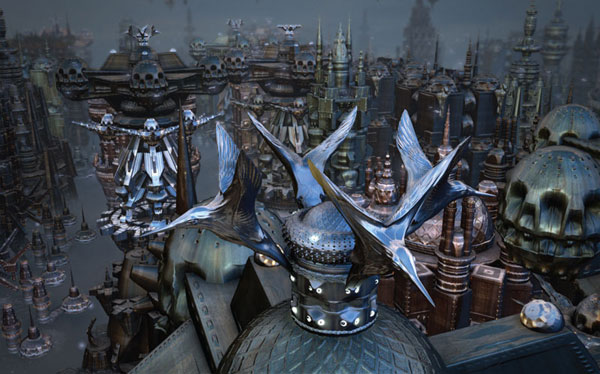
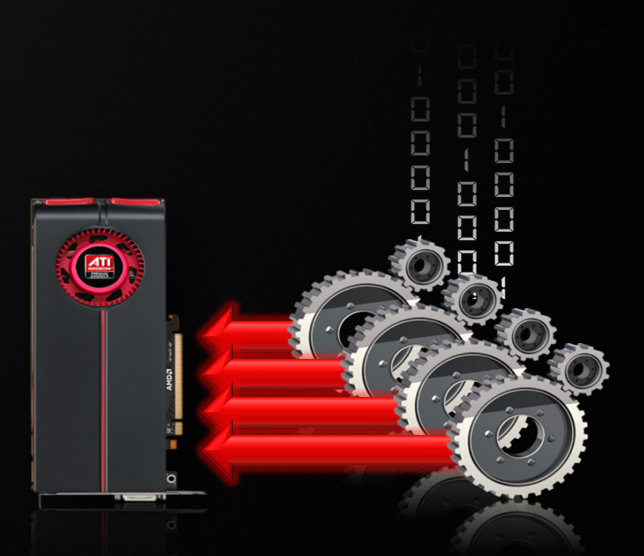
With the advent of DirectX 11 the support for multi-core CPU has been improved in order to have superior performance in both gaming sessions and in those of video or 3D objects rendering.
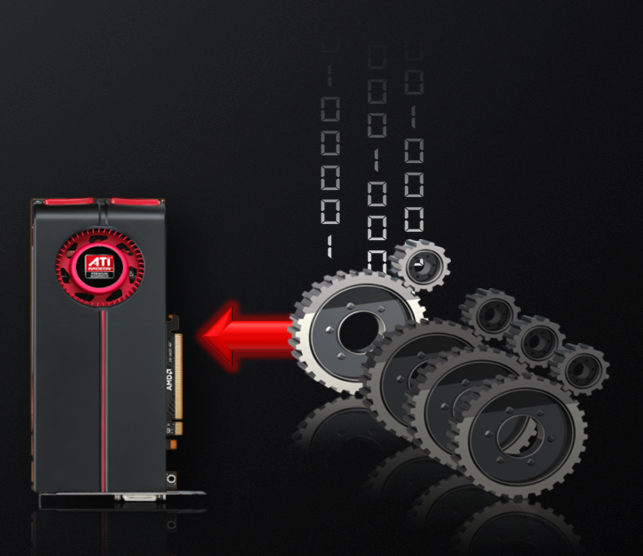
Through Direct2D technology, DirectX11 libraries also offer improved performance when using web browsing software like Internet Explorer 9 and Mozilla Firefox 4.0.
NVIDIA(R) PhysX(R)
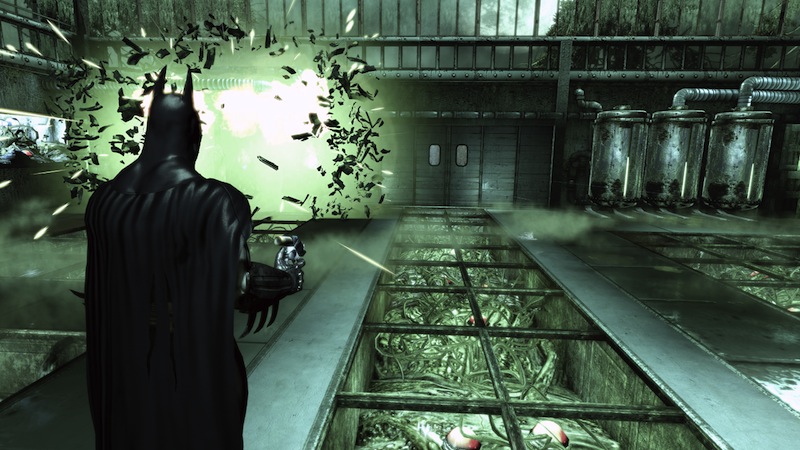
With NVIDIA (R) PhysX (R) you can reach an element of realism never seen before in games.Using the NVIDIA (R) GeForce (R) on your PC, you can enjoy a dynamic experience with PhysX (R) effects like flaming explosions, reactive debris, water, and realistic characters with lifelike appearance.
Originally, this technology was used only by dedicated video cards that has been produced by the Ageia acquired by Nvidia in February 2008, and integrated into its GPUs starting from the GeForce 8 series.Through the implementation of the APEX library, PhysX technology has reached very high levels of realism, the first title to take advantage of the APEX library Mafia 2 was produced in August 2010. APEX libraries including the following features: APEX Destruction, APEX Clothing, APEX Vegetation and APEX Turbulence.

NVIDIA(R) SLI(R)
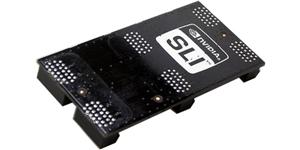
The Scalable Link Interface (SLI) was developed by Nvidia to be able to connect two or more video cards to produce a single output video signal. This technology was used for the first time in 1998 in the Voodoo 2 video cards but was not very successful due to poor performance gains. After the acquisition of 3DFX by Nvidia the technology has been reintroduced in 2004 with the same purpose but with much better performance.
In the latest generation of video cards you can select two different criteria for distributing the workload between the video cards operating in parallel:
Alternate Frame Rendering (AFR): it renders in sequential mode so that a video card renders odd frames while the other even frames.
Split Frame Rendering (SFR): the rendering is split between the boards in variable percentage.
NVIDIA(R) 3D Vision(TM)
By combining a last generation Nvidia graphics card with a NVIDIA(R) 3D Vision(TM) kit, it is possible to enjoy a much more rich 3D experience on your PC or on your workstation. This technology uses a 120Hz monitor and a pair of active eyeglasses that block the lens alternatively, such that the images intended for the left and right eyewere drawn on alternate frames.Thus each eye perceives a signal equivalent to the 60Hz frequency of the current monitors.
NVIDIA(R) 3D Vision(TM) Surround
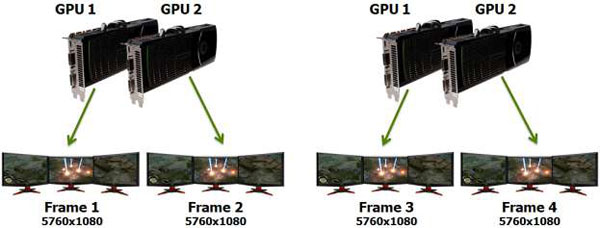
3D Vision technology from Nvidia can in turn be applied to three monitors simultaneously using two Nvidia GF110, both cards will work in AFR mode (Alternate Frame Rendering) dividing the frames, and then the work.
Obviously, the GTX590 are able to manage this technology through the use of a single card as they are multi-GPU video cards.
NVIDIA(R) CUDA
Compute Unified Device Architecture (CUDA) is a hardware architecture for the development of performant calculations produced by Nvidia. This technology allows to increase the calculation performance in demanding applications, especially in the software used by programmers and developers.
The CUDA programming languages available are extensions of the most popular programming languages, the most common is C-CUDA (C with Nvidia extensions).

NVIDIA PureVideo(R) HD
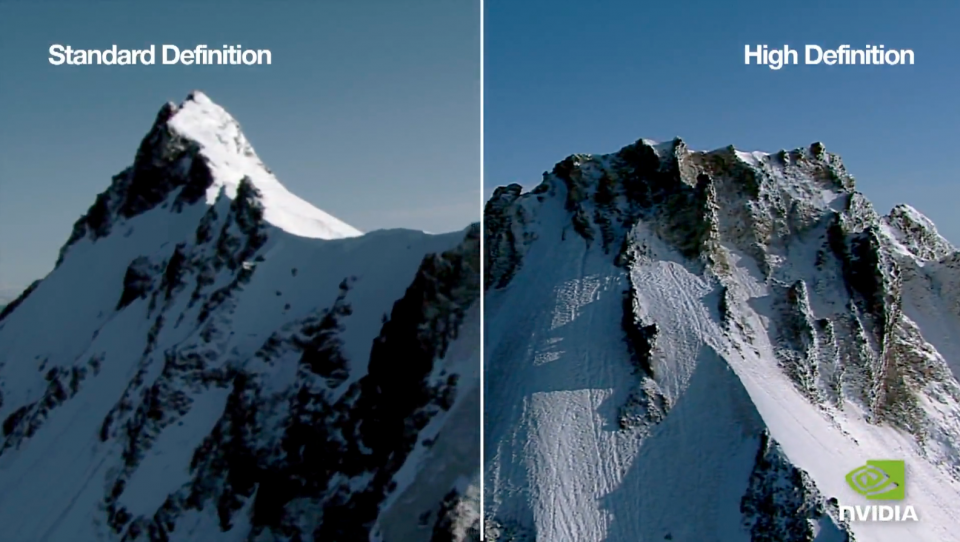
NVIDIA (R) PureVideo (R) carries the film in everyday life. PureVideo uses advanced techniques that are usually found on high end systems in the consumer market players. TV suitable for the Blu-ray, HD DVD and regular DVDs, PCs and mobile content offering crisp, clear and defined images.Whether you're watching on an LCD or a plasma TV, with PureVideo image will always be accurate and realistic. Some formats supported are H.264, WMV and MPEG-2 HD and SD.
Blu-Ray 3D Support
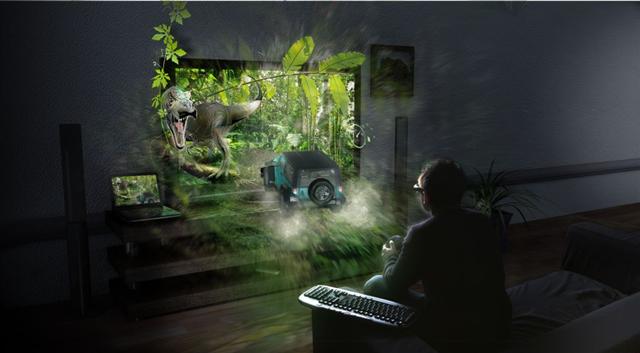
It's possible to display an high quality 3D at home with support for 1080p Blu-ray 3D, through this type of discs you can view 3D compatible content through the HDMI 1.4a port, using active-shutter glasses, or polarized passive type on suitable screens.
Hardware Video Decode Acceleration
The combination of video acceleration and high definition decoding and post-processing provides an unprecedented picture clarity, smooth video, accurate color, and precise image scaling for movies and video.
Other features include:
- PCI Express 2.0
- Dual Link DVI
- TrueHD and DTS-HD Audio Bitstreaming Support
- HDMI Output


Palit GTX 560 Sonic Platinum: package and bundleThe video card proposed by Palit is equipped with GF114, is sold in a carton aesthetically very wel made, very compact and solid in order to prevent damage from shock during transport. The graphics used are very similar to those seen in the other version of Sonic Platinum cards.images/stories/Palit/GTX_560_Sonic_Platinum/Foto/Palit_GTX_560_Sonic_Platinum_4.jpgThe front of the box is characterized ,in the central part, with the Palit 3D Graphics Engine logo, while in the top left corner there is the name of the manufacturer, Palit, while in the right side, always at the top, are the main features like DX11, 3D Vision, PhysX, Cuda and SLI.images/stories/Palit/GTX_560_Sonic_Platinum/Foto/logo_palit.jpgimages/stories/Palit/GTX_560_Sonic_Platinum/Foto/logo_sonic_platinum.jpgIn the lower right corner a stamp printed on the packaging states that the card contained belongs to the Platinum Sonic family, while at the bottom of the box we have the NVIDIA logo, followed by the words GeForce GTX 560, and the amount of on board memory that our case is 1024MB of GGDDR5 type. It is given emphasis on the DVI, VGA and HDMI outputs.images/stories/Palit/GTX_560_Sonic_Platinum/Foto/Palit_GTX_560_Sonic_Platinum_5.jpgOn the back of the box are listed all the main features about the video card in several languages including Italian.images/stories/Palit/GTX_560_Sonic_Platinum/Foto/Palit_GTX_560_Sonic_Platinum_7.jpgOnce you open the package there is another box where the card and the bundle included are inserted. The video card is wrapped in an antistatic bag, protected by bubble wrap that envelops it very accurately.images/stories/Palit/GTX_560_Sonic_Platinum/Foto/Palit_GTX_560_Sonic_Platinum_11.jpgimages/stories/Palit/GTX_560_Sonic_Platinum/Foto/Palit_GTX_560_Sonic_Platinum_10.jpgIn other areas located on the edge of the box are 2x6pin to 8pin cable and VGA to DVI adapters. Removing the card, instead, we find the installation manual and driver CD. The bundle contains the minimum necessary for proper operation. Here then listed the bundle:Drivers CD containing the card drivers
Manual
DVI to VGA Adapter
2x6pin to 8pin adapter
Palit GTX 560 Sonic Platinum: the card
The card shows a very clean and compact design. The red PCB has a length of only 18.8 cm: this ensures that the card has a very small overall size and can be easily mounted in rather compact cabinet.


The Palit GTX 560 Sonic Platinum shows a cooling system with central fan; as we can see from the next pictures the heat sink is covered by a black plastic protection that has aesthetic features but also conveying air. The rear of the PCB does not show if not for the special component arrangement which is very simple and orderly. By removing the plastic housing to which the fan is anchored in, we note that the cooling system is composed of thick plates of aluminum crossed by two pure 0.8mm copper heat pipes that transmit heat from the GF114 chip to the cooling system.

Removing the heatsink we see at the center the graphics chip, protected by an IHS, as Nvidia as has accustomed us, which is labeled GF114-325-A1. The term A1 indicates that the chip belongs to the first (and so far only) version produced.


The GPU is surrounded by Samsung memory chip products, which bear the initials K4G10325FE HC04 (http://www.samsung.com/global/business/semiconductor/productInfo.do?fmly_id=759&partnum=K4G10325FE), in our case there are 8 128MB memory modules.
images/stories/Palit/GTX_560_Sonic_Platinum/Foto/Palit_GTX_560_Sonic_Platinum_21.jpg
The power circuitry is located on the right area of the GPU, you can see the 5 phases for the GPU and VRAM power. The voltage regulator, on the other hand, is on the opposite side of the PCB and provides a voltage of 1.000 V that can be brought, by software means, up to 1.087v.

Just to the right of the power circuitry there is a connector for the PWM fan and two 6pin + 6pin power connectors positioned laterally. Close proximity to the GPU is the connector for the SLI, so we can use up to two video cards in parallel in 2-way SLI mode.


As far as we have a DVI, an HDMI and VGA video outputs.TheSonicPalit GTX560 Platinum has very high operating frequencies, compared to other competitors.The frequency of the graphics core has been increased to 900MHz and the shaders have been set at 1800 MHz, GDDR5 memory type are set to a factory operating frequency of well 4000 MHz. We can clearly infer these features from the screen performed using the GPU-Z software.
Palit GTX 560 Sonic Platinum: the cooling systemThe cooler is rather simple: the main body, as already mentioned, consists of a radiator composed of 40 aluminum fins, the size of about 7 x 12.5cm. In this lamellar system come from the pure copper base two large 0.8mm heat pipe to transmit heat from the graphics chip and transfer it to sink. The radiator is fixed to the board by screws.images/stories/Palit/GTX_560_Sonic_Platinum/Foto/Palit_GTX_560_Sonic_Platinum_22.jpgimages/stories/Palit/GTX_560_Sonic_Platinum/Foto/Palit_GTX_560_Sonic_Platinum_23.jpgTo cool the lamellar body a thermo-controlled PWM fan was installed, orange in color, produced by Power Logic; on the back it shows the PLA08015S12HH label. This fan is of Sleeve Bearing type with a diameter of 80mm and a height of 15mm. The 11 blades that make it up have a very particular shape as to ensure a good flow of air, limiting turbulences, so the card is very quiet.images/stories/Palit/GTX_560_Sonic_Platinum/Foto/Palit_GTX_560_Sonic_Platinum_27.jpgThe black PVC protective cover, in addition to the pure aesthetic function, directs the cold air in a tangential relation to the fan, so the hot air stream generated by contact with the fins pack is leaked both from the rear exit slots exiting by the fissures above the video outputs both on the front of the card, going in part within the cabinet.

The test system and testing methodology:
We tested the video card produced by Palit on the following test system:
These are the included applications, divided into two different types:Synthetic Benchmark:3D Mark Vantage - DX103D Mark 2011 - DX11Unigine Heaven Benchmark V 2.1 - DX11Stone Giant Benchmark - Dx11ComputeMark - DX11.Games:Crysis Warhead - DX10FarCry2 - DX10Mafia 2 - DX10Resident Evil 5 - DX10Final Fantasy XIV - DX10Colin McRae DiRT 2 - DX11Aliens vs Predator - DX11Metro 2033 - DX11Stalker Call of Pripyat - DX11Lost Planet 2 - DX11Tom Clancy's H.A.W.X. 2 - DX11Formula 1 2010 - DX11The tests were performed using the system described in the diagram above, using Microsoft Windows 7 Ultimate x64 operating system updated to Microsoft's official SP1.The drivers used for this test are as follows:Catalyst amd_catalyst_11.5a_hotfix_8.85.6rc1_win7_may5 for the Radeon HD 6990 4GBCatalyst 11.5 WQHL for 1GB Radeon HD 679011.3 WHQL Catalyst for Radeon HD 6800 series, Radeon HD 6970, Radeon HD 6950, Radeon HD 5700 seriesCatalyst 8.84.2 RC2 Win7 March 23 for AMD Radeon HD 6450, HD 6570 and HD 6670Forceware 260.99 WHQL for GeForce GTX 400 seriesForceware 266.58 for GeForce GTX 500 seriesForceware 270.xx for the GeForce GTX 550 TiForceware 275.33 for the Sonic Palit GeForce GTX 560 Platinum.